
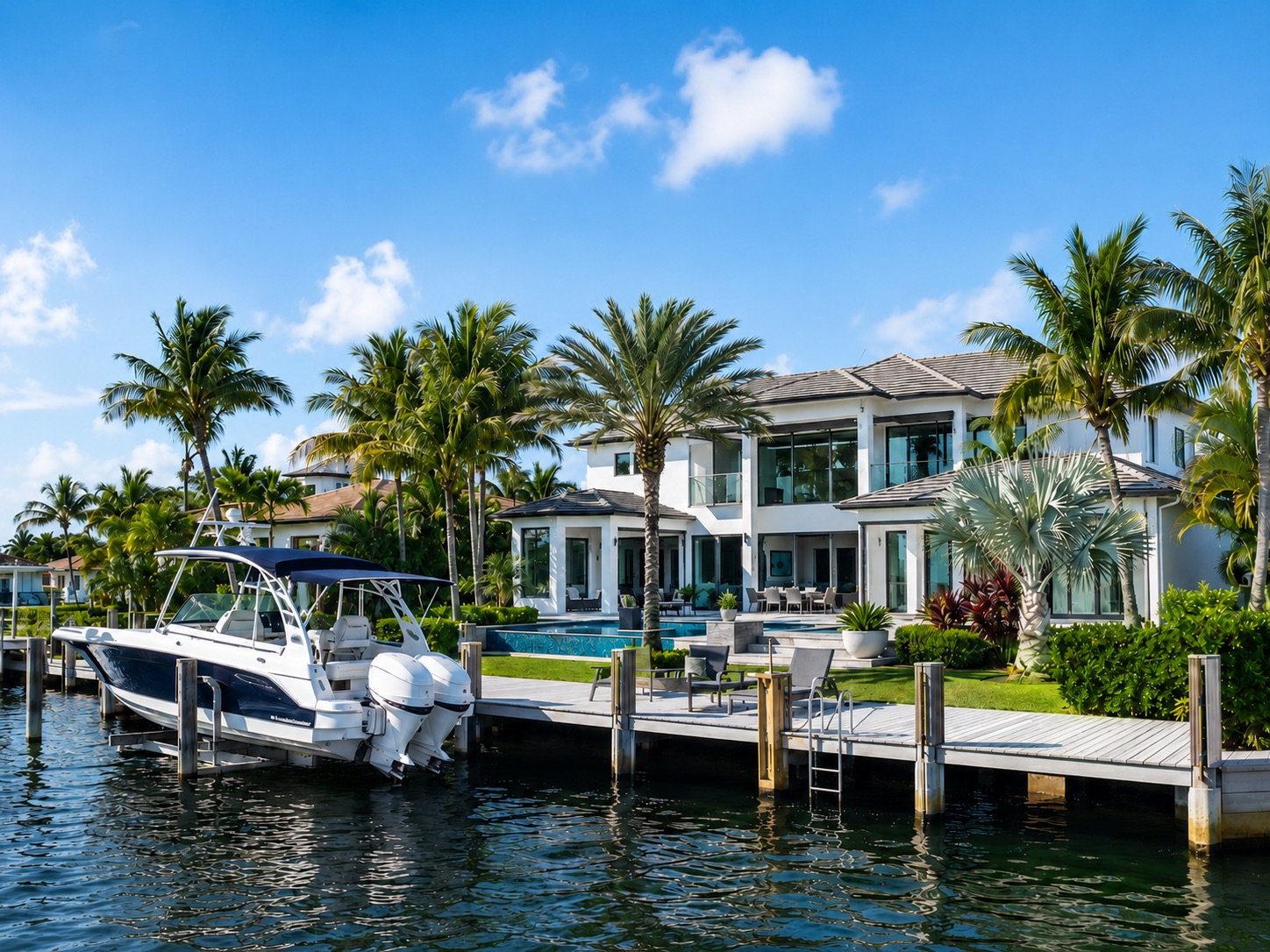
Buying a South Florida waterfront home can provide direct boating access, expansive views and a lifestyle that is difficult to replicate elsewhere. It can also introduce considerations that do not apply to a typical inland property.
The value and usability of a waterfront residence depend on more than the home itself. Water depth, bridge clearance, seawall condition, flood exposure, dock permits, insurance availability and proximity to navigable waterways can all affect whether a property is suitable for a particular buyer.
Before making an offer, buyers should evaluate both the residence and the waterfront infrastructure with the same level of care.
Begin With Your Intended Waterfront Lifestyle
The term “waterfront” can describe very different properties.
One buyer may want a quiet canal view and occasional kayak access. Another may need deep-water dockage for a large vessel with direct access to the Atlantic Ocean. These properties may appear similar online while offering substantially different functionality.
Before beginning a serious search, clarify:
- Whether you currently own or plan to purchase a boat
- The vessel’s length, beam, draft and height
- Whether fixed bridges are acceptable
- Your preferred distance from an inlet
- Whether you need a boat lift
- Whether you want direct ocean access
- Your tolerance for boat traffic and wake
- Whether swimming, paddleboarding or kayaking is important
- How much waterfront maintenance you are prepared to accept
This initial planning helps prevent a buyer from paying a waterfront premium for a property that does not support the intended use.
South Florida Waterfront Home Access: Bridges, Depth and Inlets
A property may have a private dock and still be unsuitable for a particular vessel.
Fixed bridges
A fixed bridge can restrict access based on the height of the boat above the waterline. Buyers should identify every bridge between the property and the desired destination, then verify the published clearance under relevant tidal conditions.
A listing described as having “ocean access” may still require traveling under one or more fixed bridges.
Water depth
Canal and dock depth can vary with tides, sediment accumulation and the location of the property. A buyer should not assume that a vessel can safely reach or remain at the dock based solely on the appearance of the water.
For larger boats, consider obtaining professional depth measurements during the inspection period.
Travel time to an inlet
Two properties with unrestricted ocean access may offer very different boating experiences. One may be minutes from an inlet, while another may require a lengthy trip through canals and no-wake zones.
Buyers should consider making the trip by boat before purchasing, particularly when regular offshore access is an important part of the decision.
Evaluate the Seawall Carefully
The seawall is one of the most important—and potentially expensive—components of a waterfront property.
Its purpose is to retain the soil and protect the property’s edge from erosion and water movement. A seawall can appear acceptable from the yard while showing deterioration closer to the waterline or below the surface.
Potential concerns may include:
- Cracking or displacement
- Corroded components
- Soil loss or depressions behind the wall
- Gaps between panels
- Deteriorated caps
- Leaning or bowing
- Evidence of previous patching
- Drainage problems
- Damage around dock pilings
A standard home inspection may not provide a complete evaluation of marine construction. Buyers should consider hiring a qualified seawall or marine-structure professional when the property’s value or intended use depends substantially on the waterfront.
Request any available records regarding the seawall’s age, repairs, engineering work and permits. If replacement or substantial rehabilitation may be necessary, obtain realistic cost estimates before the end of the inspection period.
Inspect the Dock and Boat Lift
A dock should be evaluated as infrastructure, not simply as an attractive amenity.
Consider the following:
- Dock dimensions
- Pilings and structural supports
- Decking condition
- Electrical service
- Shore-power connections
- Water connections
- Lighting
- Cleats and hardware
- Boat-lift capacity
- Lift cables and motors
- Distance from neighboring docks
- Available turning space
- Compliance with setbacks and local requirements
The existence of a dock does not automatically establish that every component was permitted or that it can be expanded.
Florida’s Environmental Resource Permitting program regulates many activities that alter land and water resources. Depending on the project and location, work involving docks, seawalls, dredging or filling may require an exemption, general permit or individual permit. The Florida Department of Environmental Protection provides tools for locating issued permits and verified exemptions.
Before relying on plans to enlarge a dock, add a lift or modify the seawall, consult the relevant municipal, county and state authorities. Approval should never be assumed simply because neighboring properties have similar improvements.
Verify That Existing Improvements Were Properly Permitted
Permit records can provide useful insight into the history of a waterfront property.
Review records for:
- Dock construction or replacement
- Boat-lift installation
- Seawall repair or replacement
- Pool construction
- Additions and structural alterations
- Electrical work near the water
- Dredging or shoreline work
- Major roof, window and mechanical improvements
Unpermitted work can create complications with insurance, resale, renovations and future permitting.
The buyer’s title professional, attorney, inspector and contractor may each identify different concerns. The appropriate review will depend on the property, municipality and nature of the improvements.
Research Flood Risk Beyond the Listing Description
Flood exposure should be evaluated for every waterfront purchase.
FEMA’s Flood Map Service Center provides the official flood maps used to identify mapped flood hazards and assist lenders in determining whether flood insurance is required. Buyers can search the current map by property address.
Important items to review include:
- Current FEMA flood-zone designation
- Base flood elevation
- The home’s finished-floor elevation
- Elevation certificates
- Previous flood claims
- Drainage patterns
- Street flooding
- Garage and ground-level exposure
- Location of mechanical and electrical systems
- Planned municipal drainage or resilience projects
A property located outside a designated high-risk flood zone is not necessarily free from flood risk. Heavy rainfall, storm surge, drainage limitations and future map revisions can all affect exposure.
An elevation certificate, when available, may help an insurance professional evaluate the property more accurately.
Obtain Insurance Quotes Before the Inspection Period Ends
Insurance should be investigated early—not after the buyer has become fully committed to the transaction.
A standard homeowners policy typically does not cover flooding. Flood insurance is generally obtained through a separate policy. Florida does not universally require property owners to carry flood insurance, although a mortgage lender may require it based on the property’s risk and the loan.
Ask an experienced Florida insurance professional to evaluate:
- Homeowners insurance
- Flood insurance
- Windstorm coverage
- Hurricane deductibles
- Replacement-cost limits
- Roof age and condition
- Opening protection
- Prior claims
- Elevation information
- Boat-lift and dock coverage
- Coverage for exterior structures
- Required inspections
- Available private-market and NFIP options
Florida homeowners policies may carry hurricane deductibles expressed as a percentage of the insured dwelling amount, which can result in a significant out-of-pocket obligation following a covered hurricane loss.
Do not rely exclusively on the seller’s current premium. A new owner’s quote can differ based on underwriting, coverage selections, inspections, claims history and market availability.
Examine the Home for Saltwater and Coastal Exposure
Waterfront residences experience environmental conditions that can accelerate deterioration.
Salt air, moisture, intense sunlight and wind can affect:
- Exterior metal
- Air-conditioning equipment
- Electrical components
- Railings
- Fasteners
- Windows and doors
- Roof systems
- Outdoor kitchens
- Pool equipment
- Paint and exterior finishes
- Dock hardware
- Landscaping
The home inspection should address visible corrosion and moisture intrusion. Depending on the property, additional inspections may be appropriate for the roof, electrical system, plumbing, HVAC equipment, pool, seawall, dock, mold and pests.
Buyers should also determine whether major exterior components were selected and installed for coastal conditions.
Confirm Survey, Boundary and Waterfront Information
A current survey can help clarify the relationship between the residence, property boundaries and waterfront improvements.
Ask the surveyor or closing professional to evaluate:
- Property lines
- Dock location
- Seawall location
- Easements
- Encroachments
- Setbacks
- Access rights
- Recorded restrictions
- Relationship to adjacent properties
- Whether improvements cross the apparent boundary
Waterfront ownership and use rights can involve legal issues that are highly property-specific. Questions regarding submerged land, riparian rights, shared docks, easements or access should be reviewed by a qualified Florida real estate attorney.
Understand the Property-Tax Impact of the Purchase
A buyer should not assume that the seller’s current property-tax bill will continue after the sale.
Florida property taxes are based partly on assessed value, exemptions and local millage rates. Eligible primary-residence owners may receive a homestead exemption of up to $50,000, and qualifying Florida homeowners may be able to transfer part of their Save Our Homes assessment benefit to a new homestead through portability.
Ask the appropriate county property appraiser or tax professional to estimate taxes based on the anticipated purchase price and intended use.
This is particularly important for waterfront homes that may have been owned for many years and carry an assessed value substantially below the current market value.
Consider the Surrounding Waterway and Neighborhood
The property should be evaluated in its wider setting.
Visit at different times and observe:
- Boat traffic
- Wake and noise
- Street parking
- Tidal conditions
- Water quality
- Nearby commercial activity
- Construction
- Neighboring docks and vessels
- Nighttime lighting
- Weekend activity
- Road access during heavy rain
- Distance to shops, restaurants and services
A calm canal during a weekday showing may feel very different on a busy weekend.
For buyers who plan to live in the home full time, the neighborhood’s land-based characteristics remain just as important as its water access.
Structure the Offer Around Waterfront Due Diligence
A strong offer does not necessarily mean eliminating important protections.
Depending on the transaction, buyers may need sufficient time to complete:
- General home inspection
- Seawall inspection
- Dock and boat-lift inspection
- Insurance underwriting
- Flood-zone and elevation review
- Survey review
- Permit research
- Financing and appraisal
- Association document review
- Legal review of waterfront rights or restrictions
The terms should reflect the property’s complexity, the buyer’s financing and the competitive environment.
A waterfront home with older marine infrastructure may require more extensive investigation than a recently completed property with comprehensive plans, permits and warranties.
South Florida Waterfront Home Buyer Checklist
Before completing the purchase, confirm that you understand:
- The route from the property to open water
- All bridge clearances
- Typical water depth
- Dock dimensions and condition
- Boat-lift capacity
- Seawall condition and estimated remaining life
- Flood-zone and elevation information
- Homeowners and flood-insurance costs
- Hurricane deductible exposure
- Permit history
- Survey and boundary conditions
- Property-tax implications
- Association rules, where applicable
- Ongoing marine-maintenance requirements
The objective is not to eliminate every future expense. It is to understand the property well enough to make an informed decision and budget appropriately.
Find the Right South Florida Waterfront Property
A South Florida waterfront home should complement both your financial goals and your intended lifestyle.
The most valuable assistance often begins before the property search—with a clear understanding of boating requirements, preferred communities, ownership costs and acceptable levels of maintenance.
D’Onofrio Realty can help you evaluate waterfront opportunities throughout South Florida, compare properties based on their practical boating characteristics and coordinate the specialized due diligence required before closing.
Explore current waterfront properties or request a personalized property search based on your location, boating and lifestyle preferences.
This article is provided for general informational purposes and does not constitute legal, engineering, insurance, tax, marine-survey or financial advice. Buyers should consult appropriately licensed professionals regarding a specific property.